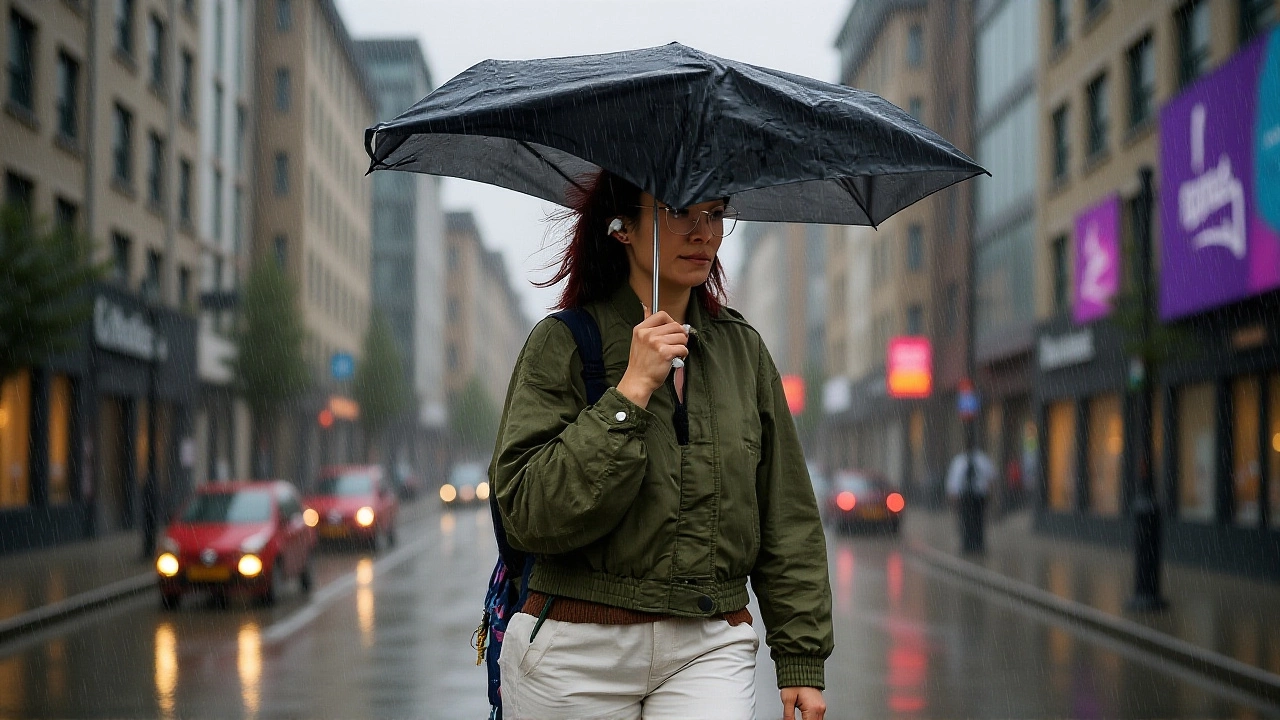
On the evening of November 14, 2025, the Met Office issued its most urgent weather alerts in months as Storm Cloudia swept across the United Kingdom, dumping up to 100 millimeters of rain in some areas and triggering fears of life-threatening floods. Presenter Amy Bokota delivered the forecast from the Met Office headquarters in Exeter, Devon, warning that southeastern Wales was bracing for the worst, with flash flooding already reported in the Brecon Beacons by midnight. The storm, though centered far out over the Atlantic, was pulling moisture-laden air across the country like a wet sponge being wrung out — and the result was catastrophic.
What the Warnings Actually Mean
An amber rain warning stretched from the Wash — that vast, tidal estuary where Norfolk meets Lincolnshire — up through the southern Pennines, covering parts of eastern England and central Wales. In those zones, 80 millimeters of rain was expected in just 24 hours. But it was southeastern Wales that got the worst of it: isolated spots near Abergavenny and the Wye Valley saw over 100 millimeters, equivalent to nearly four inches of rain falling in a single day. Meanwhile, a yellow rain warning covered most of England and the rest of Wales, with 50 millimeters expected across the board. That’s enough to turn minor streams into raging torrents.
Compounding the problem, a separate yellow wind warning was active over northwest Wales and parts of Cumbria and Lancashire. Gusts of 50 to 60 mph were ripping across exposed coastal ridges, knocking down trees onto roads and snapping power lines. The Met Office’s own guidance is clear: amber means ‘be prepared to change your plans.’ But this wasn’t just about missed trains. It was about homes being evacuated, emergency services stretched thin, and rivers bursting their banks before midnight.
Who’s Affected — And How Bad Is It?
By 2 a.m. on November 15, the Met Office had logged over 1,200 flood alerts across England and Wales. In Monmouthshire, a section of the A465 was completely submerged, stranding a busload of commuters. In the Vale of Glamorgan, three homes were evacuated after basement flooding turned streets into rivers. Rail operator Transport for Wales reported delays of up to three hours on the South Wales Main Line, with services between Cardiff and Swansea suspended entirely after landslides blocked tracks near Ely.
Power cuts hit 18,000 homes in the northwest, according to National Grid. In the Lake District, a small community near Keswick was cut off after the River Greta overflowed, washing out a key bridge. Local councilor Linda Griffiths told the BBC: “We’ve had flooding before — but never this fast. The water came up over the doorstep in 20 minutes. We had to pull our elderly neighbor out on a mattress.”
What made this storm so dangerous wasn’t just the volume of rain — it was the timing. The ground was already saturated from two weeks of near-daily showers. There was nowhere for the water to go. “It’s like trying to pour a gallon of water into a glass that’s already full,” said Dr. James Trew, a hydrologist at Cardiff University. “This wasn’t just a storm. It was a perfect storm of hydrological stress.”
Why This Isn’t Just a One-Off
Climate scientists are sounding alarms. The Met Office’s own 2024 climate report noted that extreme rainfall events in the UK have increased by 40% since 1990. Storm Cloudia wasn’t unusual in its path — but its intensity was. The 100-millimeter rainfall in southeastern Wales matched levels last seen during the 2019 floods in Yorkshire, which caused £230 million in damages.
And the infrastructure isn’t keeping up. Many of the drainage systems in towns like Hereford and Wrexham were designed for 1960s rainfall patterns — not 2025’s. “We’re retrofitting pipes and culverts with one hand while the climate is rewriting the rules with the other,” said Sarah Huxley, a civil engineer with the Environment Agency. “We’re playing catch-up.”

What Comes Next
The storm’s core moved eastward by Saturday morning, but the danger didn’t vanish. With rivers still rising and reservoirs nearing capacity, the Met Office extended its amber warning into Sunday. A new yellow alert was issued for the Midlands, where runoff from Wales was now flowing into the River Severn. Emergency crews were on standby in 14 counties. The government announced £5 million in immediate flood relief funding, but local councils are already calling it insufficient.
Meanwhile, the Met Office confirmed it would begin a review of its warning thresholds, particularly for amber-level rainfall events. “We need to be more precise,” said Chief Meteorologist Dr. Helen Myles in a press briefing. “The public needs to know not just that rain is coming — but where it’s going to break the system.”
What You Can Do
If you’re in a flood-prone area — especially near rivers, valleys, or low-lying roads — don’t wait for an official evacuation order. Move valuables upstairs. Fill containers with clean water. Avoid driving through standing water — just six inches can sweep away a car. And if you hear a loud, roaring sound that isn’t thunder? Get to higher ground immediately. That’s not just wind. That’s floodwater coming.
Frequently Asked Questions
How much rain fell in southeastern Wales during Storm Cloudia?
Isolated areas in southeastern Wales, particularly around Abergavenny and the Wye Valley, received over 100 millimeters (nearly 4 inches) of rain within 24 hours. This exceeded the 80 millimeters recorded across the broader amber warning zone and the 50 millimeters in yellow warning areas. Such totals are rare — only seen in the UK about once every 15 years — and overwhelmed drainage systems already weakened by prior saturation.
Why was Storm Cloudia so disruptive despite being far from the UK?
Though Storm Cloudia’s center remained over the Atlantic, its trailing cold front dragged a plume of moist air across the UK, funneling it against the hills of Wales and northern England. This orographic lift forced the air to rise, cool, and dump massive amounts of rain. Think of it like a sponge held over a mountain range — the water doesn’t fall where the storm is, but where the terrain forces it down.
What infrastructure failures contributed to the flooding?
Many towns in Wales and northern England rely on drainage systems built in the 1950s–70s, designed for rainfall levels 30–40% lower than today’s extremes. In places like Monmouth and Wrexham, culverts were clogged with debris, and riverbanks had been concreted over, reducing natural absorption. The Environment Agency admitted that over 60% of flood defenses in Wales are past their 30-year design life.
Are power cuts and transport delays expected to continue?
Yes. With saturated ground, even light rain on Saturday triggered fresh landslides on rail lines near Cardiff. National Grid reported 2,300 repair crews were deployed, but some areas — particularly in remote valleys — may remain without power for up to 72 hours. Train operators expect delays through Monday, with some lines requiring structural inspections before reopening.
How does this compare to previous UK flooding events?
Storm Cloudia’s rainfall totals rival those of the 2019 Yorkshire floods and the 2007 nationwide deluge. But unlike those events, this one struck after weeks of persistent rain, leaving no buffer in the soil. The Met Office recorded 12 consecutive days of above-average rainfall before the storm — a pattern consistent with climate projections for the UK. This wasn’t a single disaster — it was the culmination of a wetter, wilder climate.
What’s being done to prevent this from happening again?
The government has pledged £200 million over five years for flood defenses, focusing on Wales and the North West. But experts say this is still half of what’s needed. The Environment Agency is accelerating natural flood management — like restoring wetlands and planting trees in upstream valleys — to slow runoff. Still, without a national overhaul of drainage standards, similar events will become the norm, not the exception.